CAT3D: Create Anything in 3D with Multi-View Diffusion Models
CAT3D: Create Anything in 3D with Multi-View Diffusion Models
Background
Variational Autoencoder (VAE)
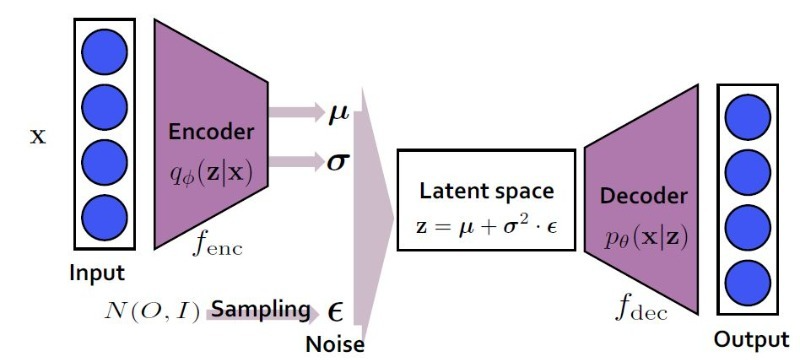
A type of generative model that adapts the autoencoder approach. A typical AE encodes the main features of the training data into a low-dimensional latent space, and feeds the mapped latent variable into a decoder so that the output takes the same form as the training data.
In contrast, the goal of a VAE is not to produce an output \(x\) identical to the input, but to produce new data \(x^{'}\) that is “similar” to \(x\). To do this, denoting the input as \(x\) and the latent variable as \(z\), the objective is to find the \(p(x\vert z)\) that maximizes the likelihood of \(x\). Therefore, the latent \(z\) is expressed not as a single compressed result but as a probability distribution.
Also, whereas in an AE the goal is to find a good encoder that performs appropriate mapping, in a VAE the goal is to find a good decoder that performs appropriate generation.
Latent Diffusion Model (LDM)
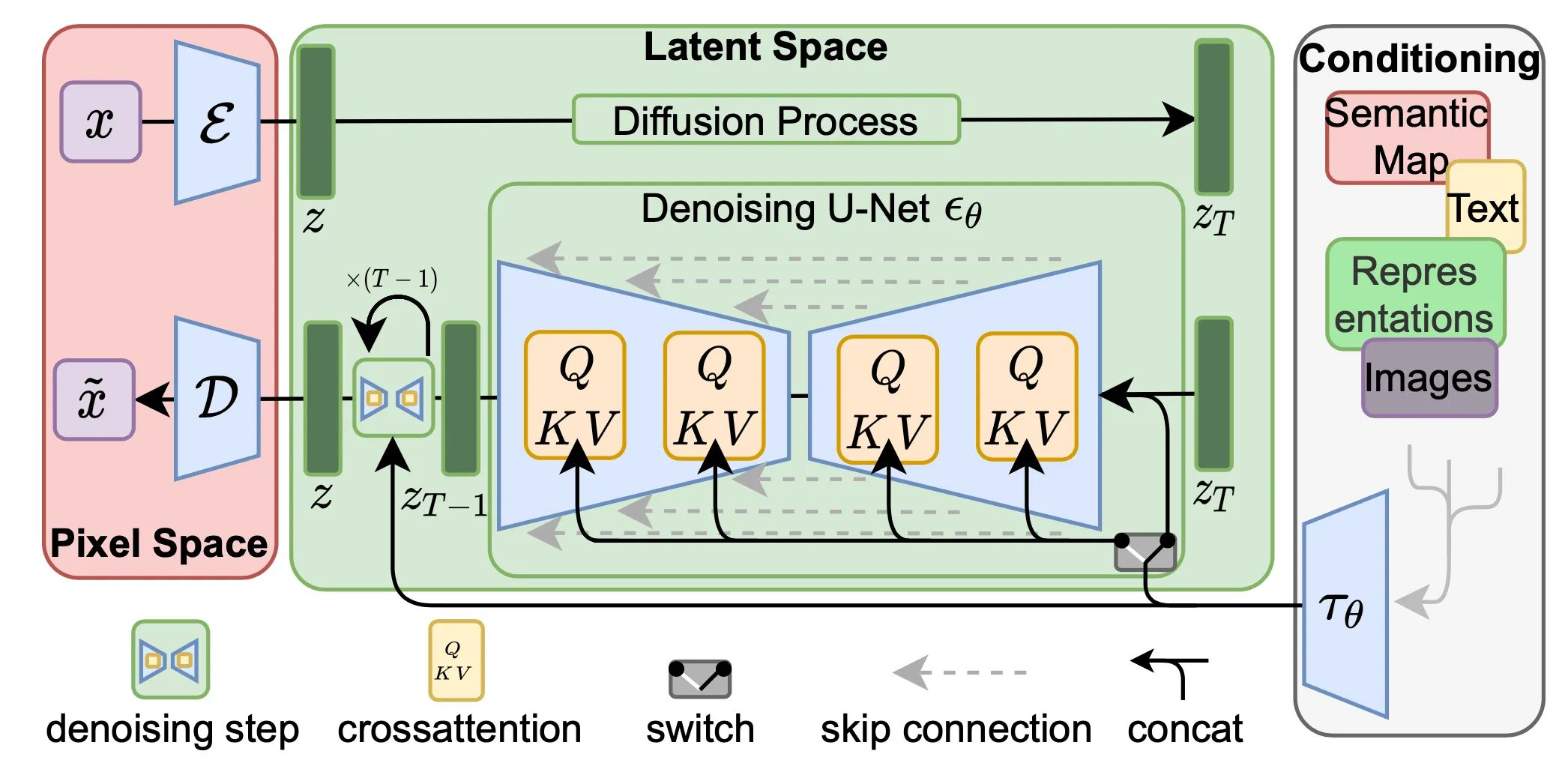
Put simply, a diffusion model itself learns to add noise to an image to make it random, and then denoise it to restore the image. Thus, when generating an image, inference is done by generating the image from random noise. However, applying diffusion in image space is actually very computationally heavy and inefficient. Therefore, LDM is a methodology that performs diffusion in the latent space of a VAE.
The training and inference structure of LDM is as follows:
- image → VAE encoder → latent
- add noise to the latent → learn denoising
- at generation time, denoise a random latent
- feed the restored latent into the VAE decoder to reconstruct the image
Problem Setting & Motivation
The paper takes few-shot 3D Reconstruction as its task. This is a task that has already been attempted in various ways, and the prior approaches presented in the paper are as follows:
- Adding geometry regularization
- Feed-forward models that generate a 3D object from just a single input image
- Generative priors conditioned on images or text However, each of these approaches has limitations in terms of quality, efficiency, and generality.
Accordingly, CAT3D views the fundamental problem of few-shot 3D Reconstruction as the lack of a sufficient number of input views, and aims to solve the problem by generating many views.
Contribution
Compared to existing models that handle the few-shot 3D Reconstruction task using diffusion priors, it has the following contributions:
- Consistency between views is well maintained. ⇒ 3D Reconstruction without distillation
- Low model complexity. The generation process and the reconstruction process are separated, which makes it fast
- Efficient sampling enables the creation of denser input views compared to existing models.
Method
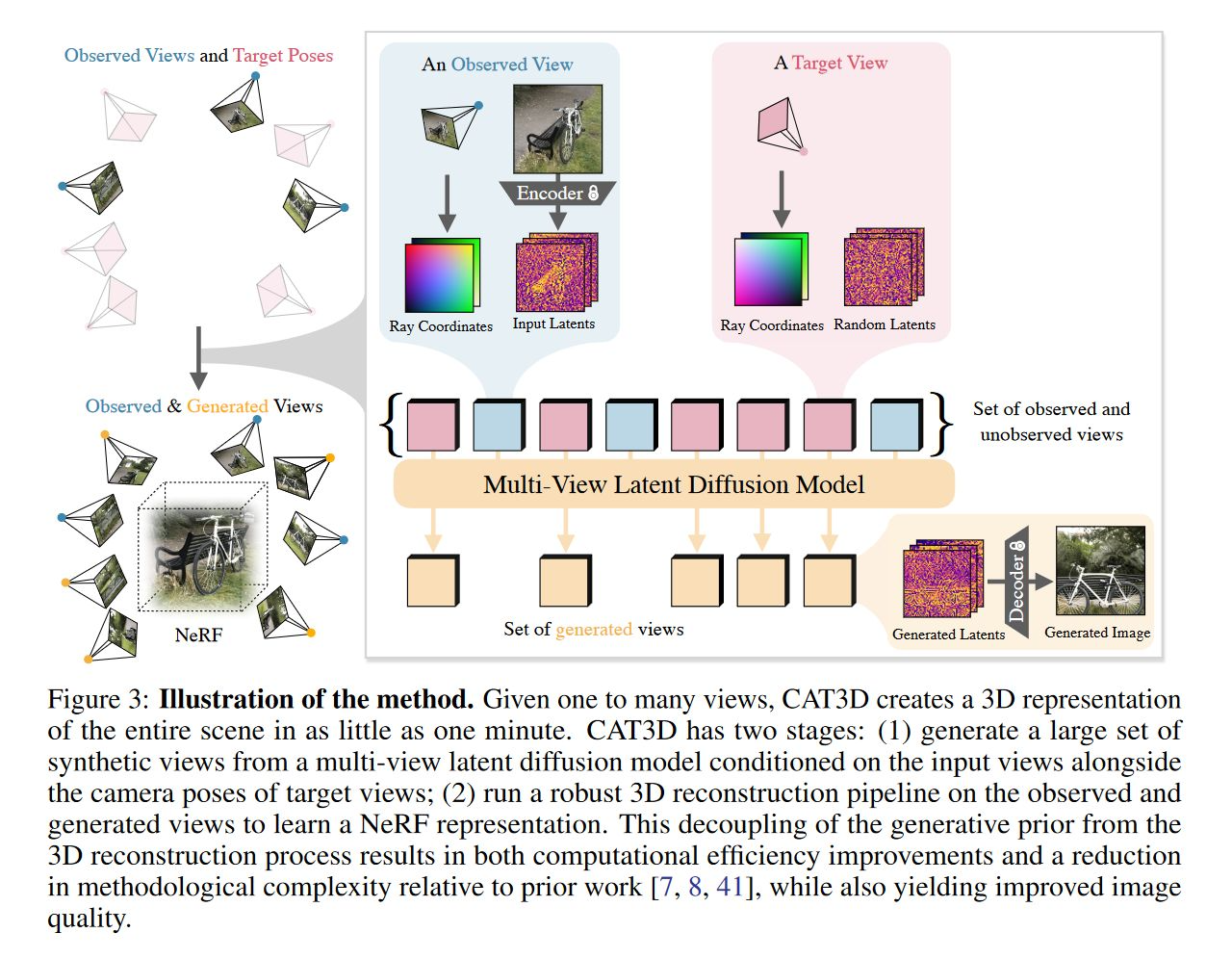
The overall CAT3D pipeline consists of two stages.
- Novel view generation using a Multi-view Diffusion Model
- Input: images + camera intrinsic and extrinsic parameters
- 3D Reconstruction
- Uses NeRF. Input: generated Novel Views + actual GT images
1. Novel View Generation Using a Multi-view Diffusion Model
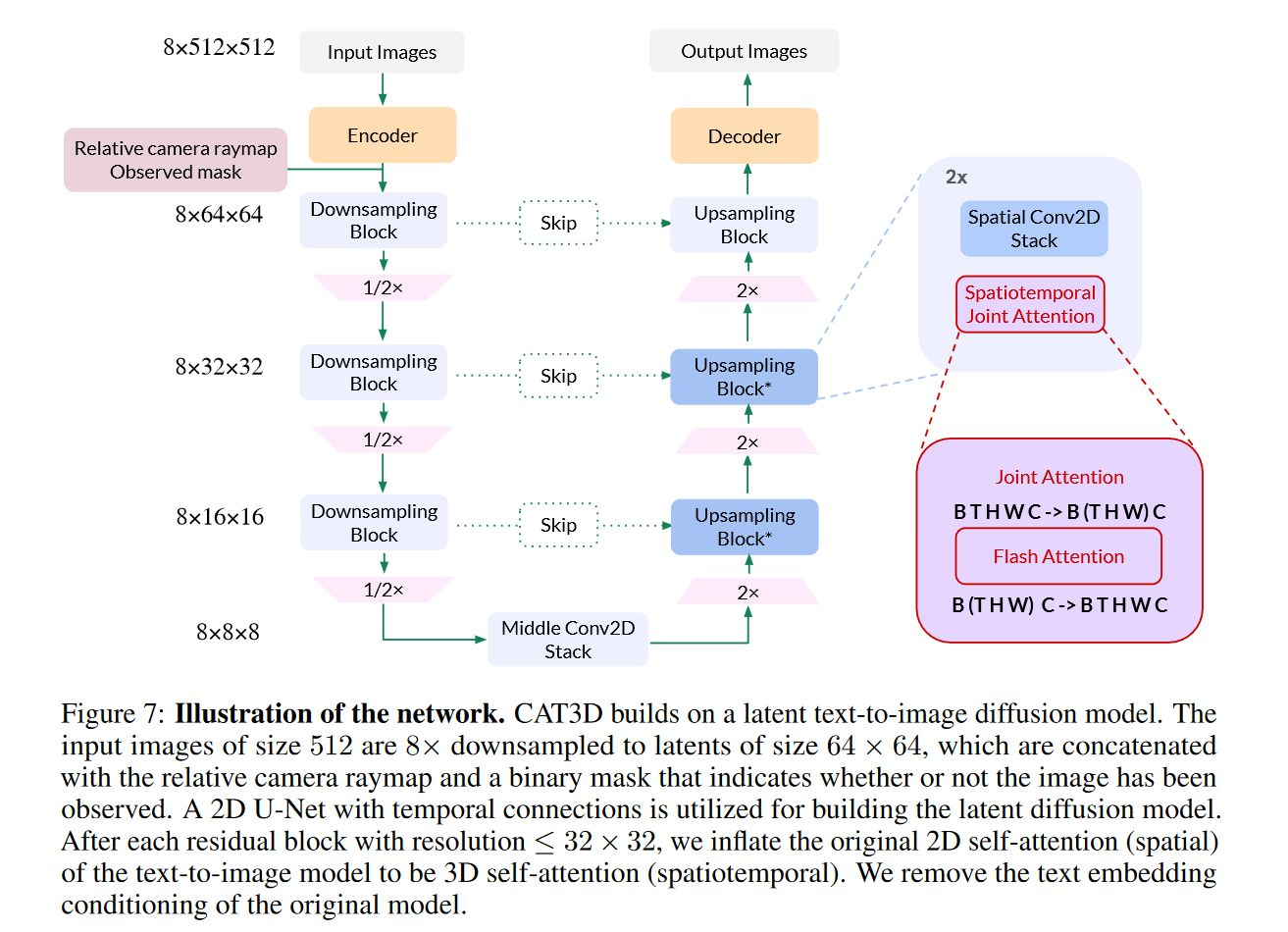
The conditional probability modeled in this process is as follows:
\[p\left(\mathbf{I}^{\text{tgt}}\vert \mathbf{I}^{\text{cond}}, \mathbf{p}^{\text{cond}}, \mathbf{p}^{\text{tgt}}\right).\]- \(\mathbf{I}_{\text{cond}}\): the M input images given as conditions
- \(\mathbf{p}_{\text{cond}}\): the camera poses of those images
- \(\mathbf{p}^{\text{tgt}}\): the camera poses of the novel views to be generated
- \(\mathbf{I}^{\text{tgt}}\): the N images to be generated
Multi-View Diffusion Model
- CAT3D’s diffusion process is similar to the method of a video LDM, but instead of a time embedding, it adds a camera pose embedding to the images.
- Both the input images and the target images are converted into latents.
- Through the diffusion model, it learns the joint distribution of the target image latents from each of these input images. That is, it generates multiple target images together while accounting for consistency.
- It takes a pre-trained LDM model and lowers the model complexity by only adding some of the necessary structures.
- To reflect the spatial information of the latents across images, the self-attention layer after the 2D residual block in the existing LDM is transformed into 3D self-attention (the in-image spatial x, y axes + the across-image spatial z axis)
The Training Strategy is as follows:
- target views are noisy latents, input views are clean latents
- during the diffusion process, noise is added only to the latents of the target views
- the loss is also computed only over the target views
- Adding a Binary mask
- a mask indicating whether each latent is a conditioning image or a target image is added to the channels
- Train setting
- M + N = 8 (8 images total)
- M = 1 → N = 7
- M = 3 → N = 5
- The two settings are mixed randomly during training → achieving generality
- M + N = 8 (8 images total)
Adjusting the Noise schedule?
Raymap
In terms of the camera pose input method, existing approaches encoded camera parameters into a low-dim pose vector for use. However, CAT3D uses the Raymap approach.
- First, for each pixel of each image, the ray’s origin and direction are computed, and a Raymap represented as a map of the same size as the latent is generated.
- This is then concatenated to the latent along the channel direction. Here, the pose is computed relative to the space of the first input image. (Not World Space)
Example
Grouped Sampling Strategy
Looking again at the training process, the number of target images that can be generated at once was at most 7, i.e., input images + target images totaling at most 8. However, for 3D Reconstruction, dozens of images are needed, and to achieve this, more images must be generated efficiently.
As a way to do this, CAT3D proposes a Grouped Sampling Strategy. This method is applied differently for the case of a single input image versus multiple input images.
- When there is a single input image: autoregressive sampling : In this case, it first generates 7 anchor views covering the entire scene from the input image, and clusters multiple target views based on these anchor views. Then, the target views within a cluster are generated in parallel from the anchor views + the input view. → securing long-range consistency between anchor views → maintaining local coherence within each group
- When there are multiple input images: : It first clusters all target views based on camera position, grouping nearby views together. It refers to the M input images nearest to the target view to be generated, and likewise generates the target view clusters in parallel. Since there is no process of generating anchor views here, it is not autoregressive.
2. Robust 3D Reconstruction
No matter how much consistency was considered, the novel views generated earlier are synthetic images, so they cannot be completely free of artifacts. Therefore, correction is also needed in the reconstruction process. Accordingly, CAT3D takes the following approach:
- Adds an LPIPS loss term between the rendered image and the input image to compare high-level semantic similarity
- Under the assumption that the uncertainty of generated novel views will be higher the farther they are spatially from the input images, it learns weights so that views closer to the input images have higher weights
Results
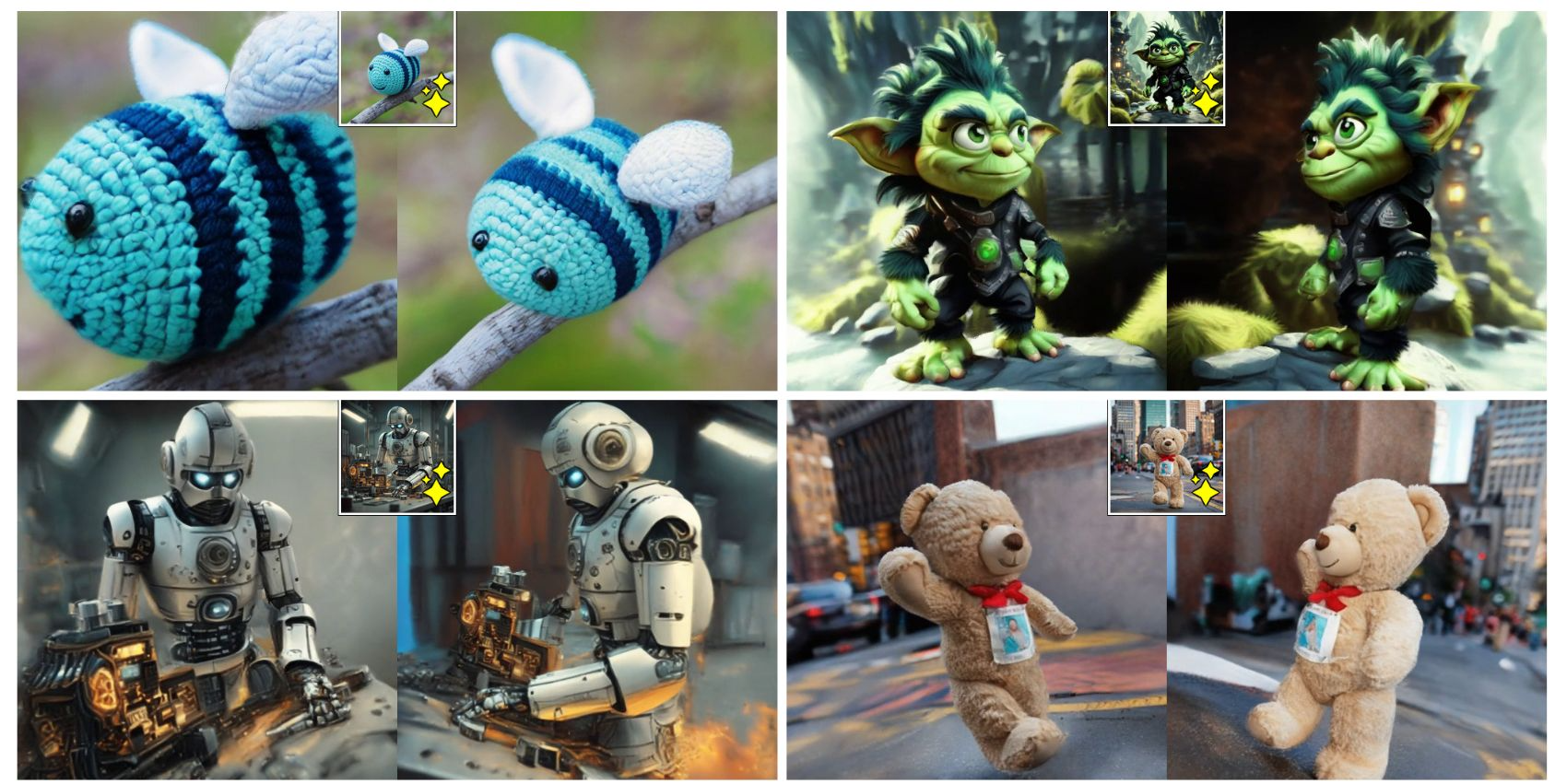
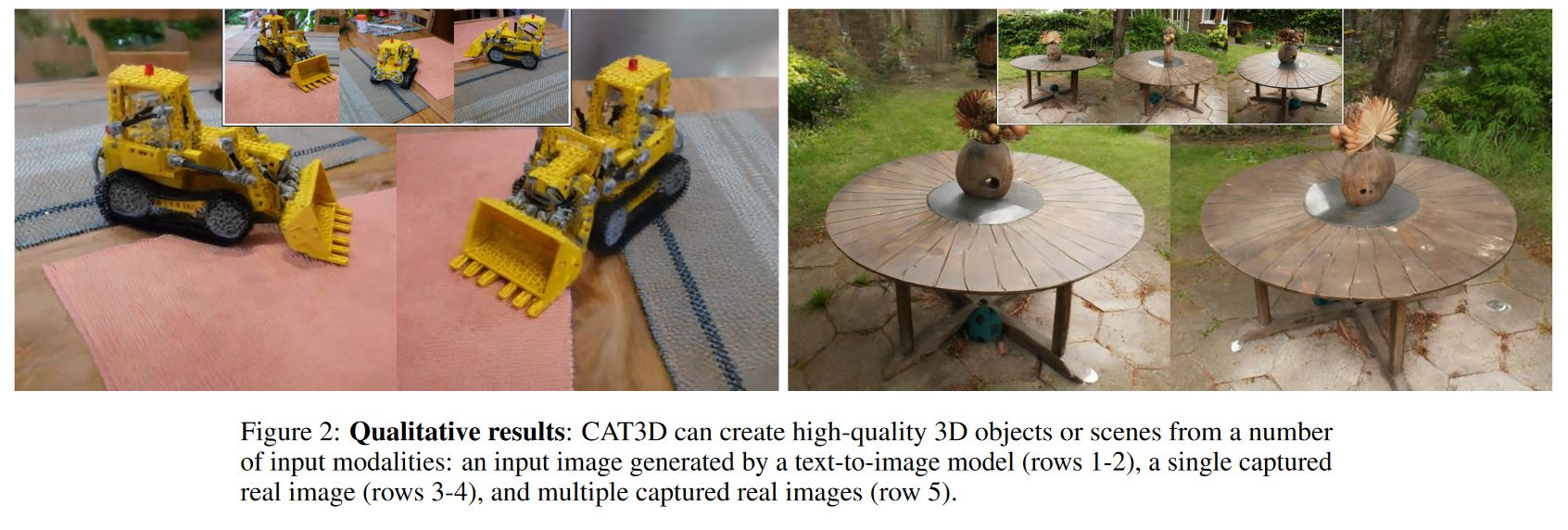
Comparison
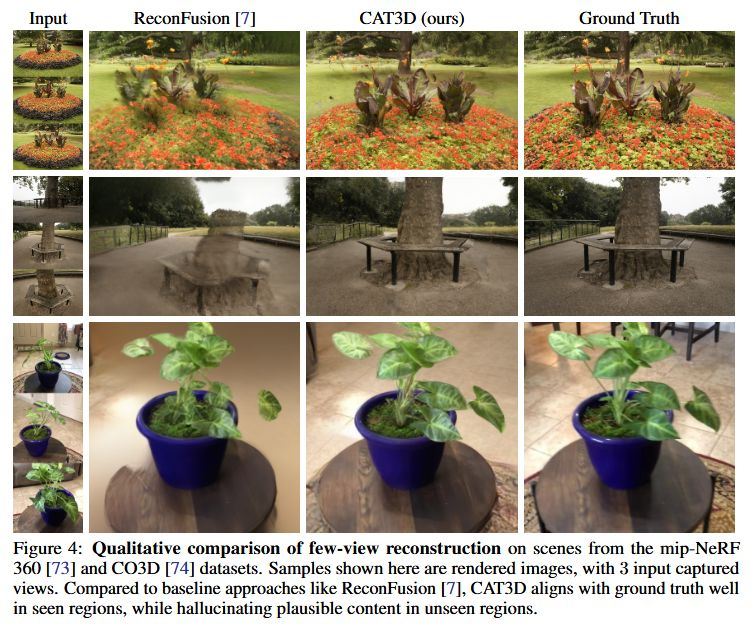
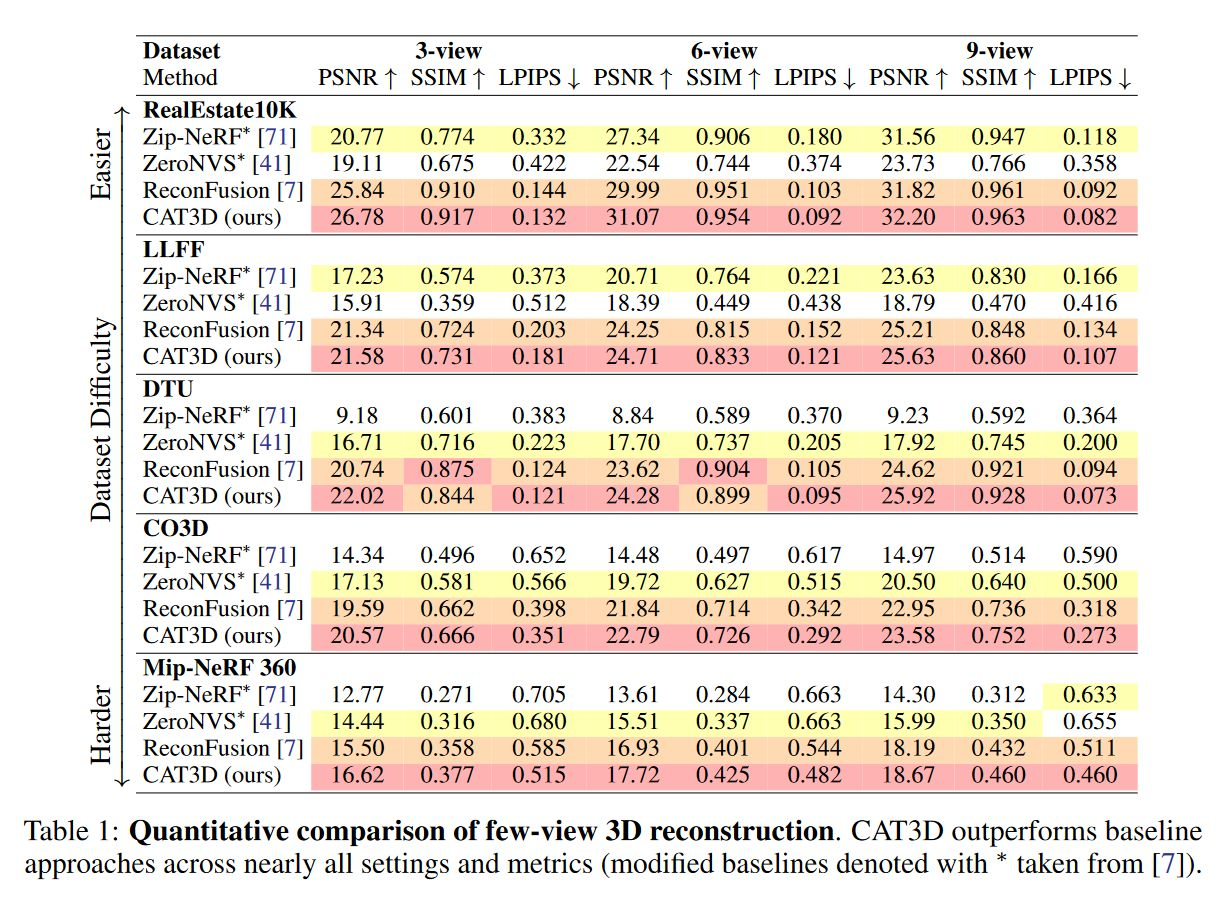
It consistently shows good performance on the LPIPS metric, and looking at the qualitative results, one can appropriately confirm that the perceptual quality is good.
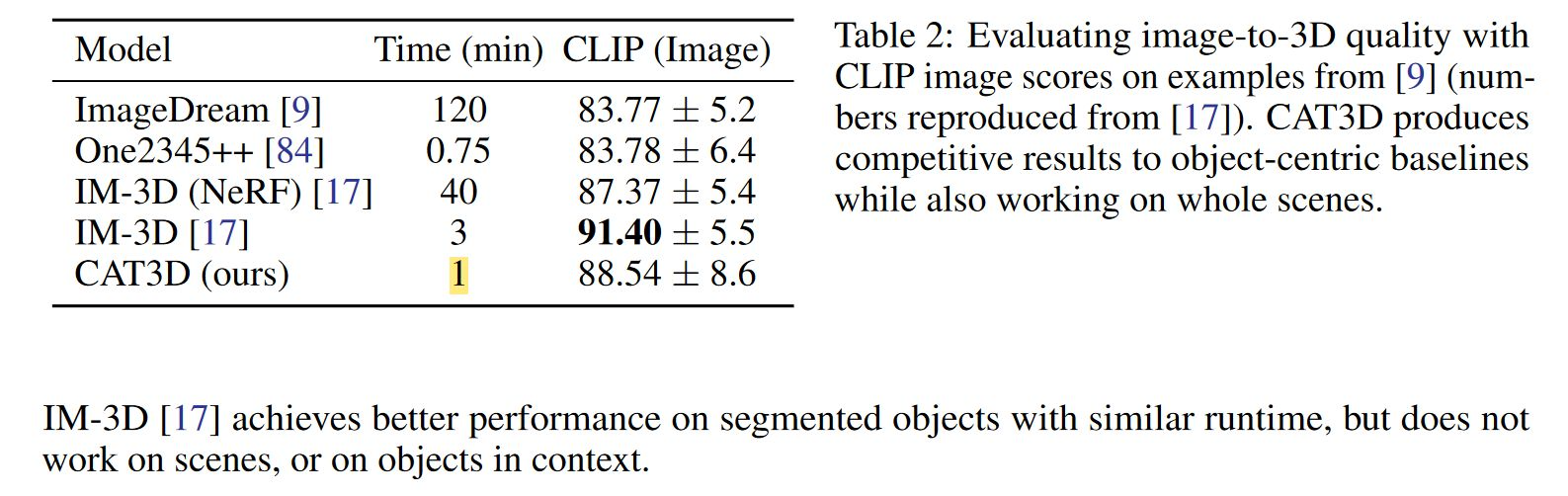
In terms of time, it showed the fastest runtime, but IM-3D achieved a higher CLIP score at a similar speed. However, since CAT3D can also be used for scenes or objects in context, it was seen as demonstrating high generality with reasonable efficiency.
Ablation Study
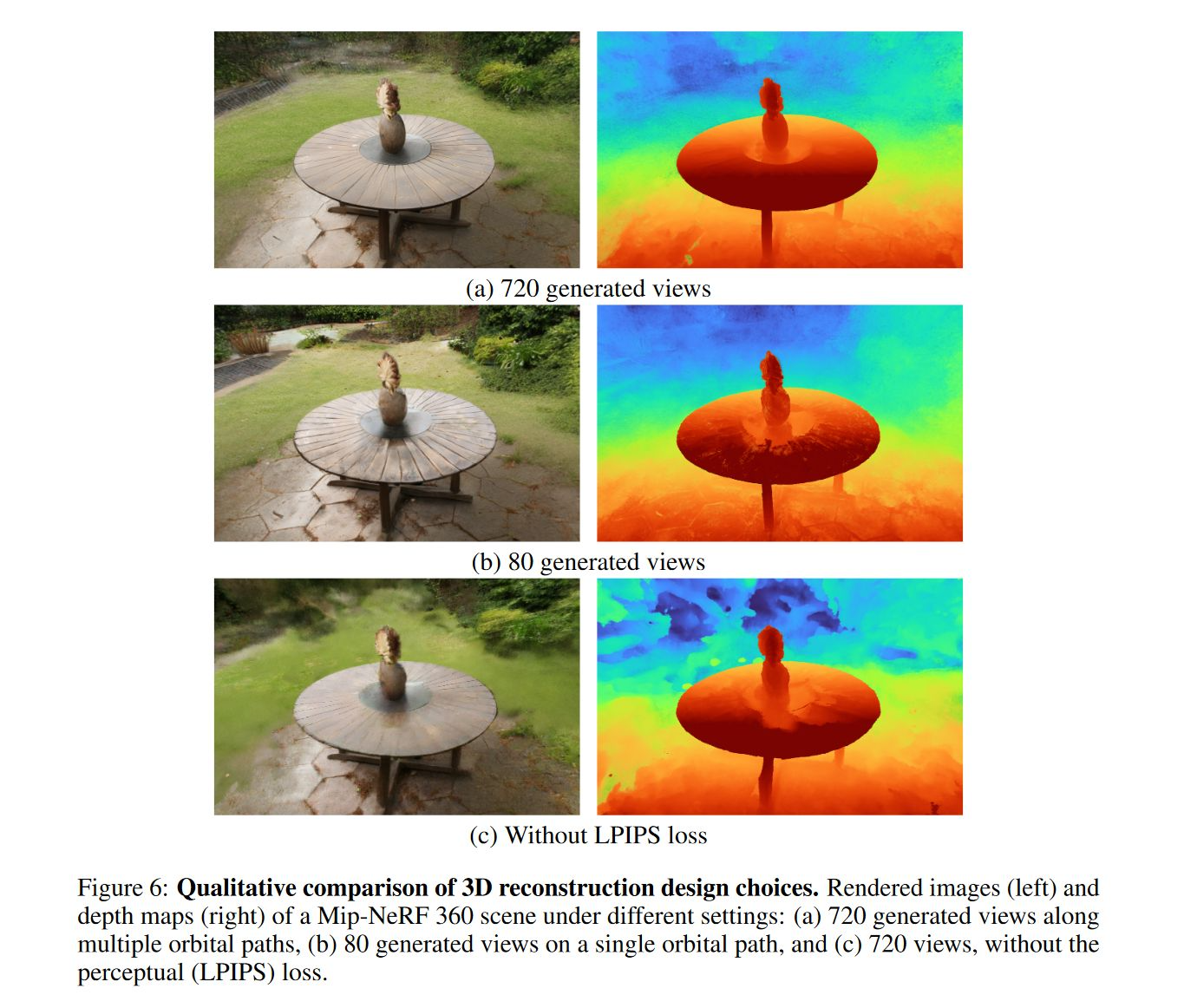
But visually, when comparing (a) generated from few-views with (b) generated from a single-view, (b) seems to render the texture of the objects within the scene better. (a) rather has too strong a characteristic blurry feeling of generative models. Hmm…
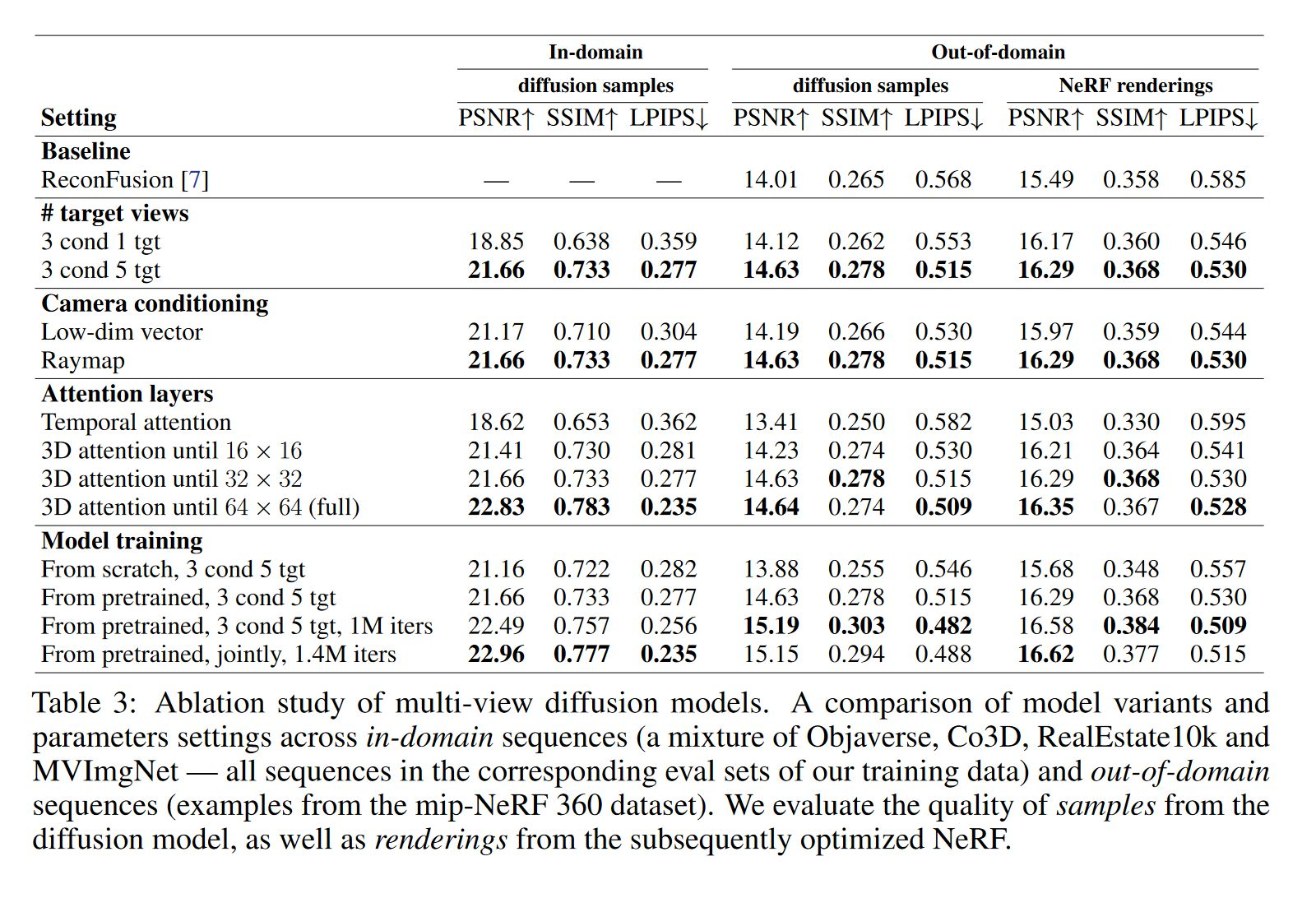
Generating target views in parallel showed higher performance. Using the raymap did yield quantitatively higher performance, but it does not appear to be a large difference.
Limitation
- Since it is NeRF-based + diffusion-based, geometric precision is inevitably lacking
- Setting the camera trajectory seems to be a more sensitive problem than expected
- Performance has not been verified for real-world image inputs
- text input is still only implemented at a fairly simple level